
Active in the East Valley at 35 to 50: Where We Play and How to Keep Playing
From Usery trails to the Salt River, how East Valley adults in their 30s and 40s stay active, and how Restore Health helps them prevent and recover from injuries.
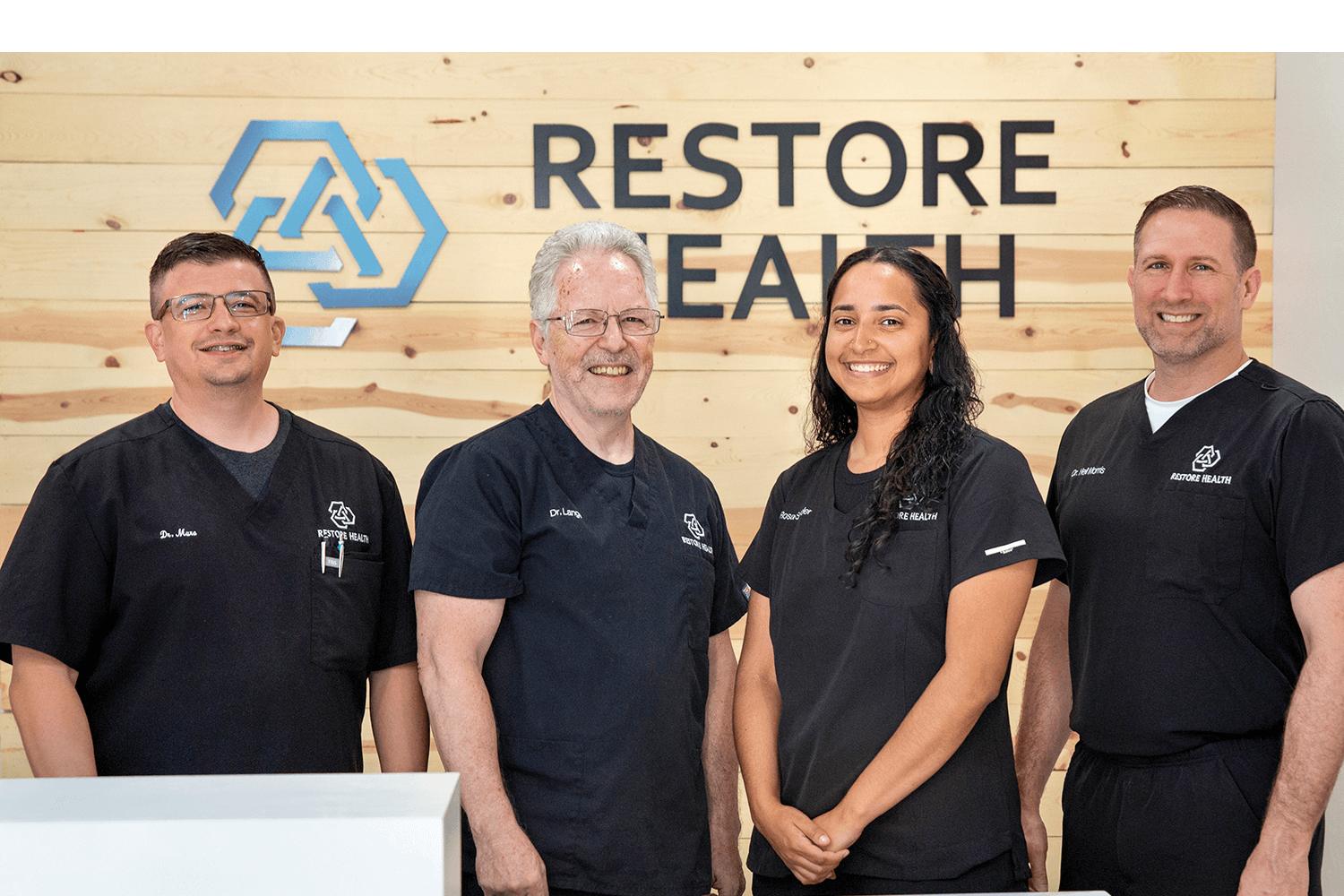 The doctors at Restore HealthRestore Health, Mesa

November is when the East Valley remembers why it lives here. The mornings are cool, the trailhead lots fill before sunrise, and everyone who spent the summer training at 5 a.m. or not at all is suddenly outside again. If you're somewhere between 35 and 50, you're probably in the thick of it: fitter than you were at 25 in some ways, slower to bounce back in others, and fitting all of it around work and kids.
We see this crowd every day at our office in Mesa, and a few of us are part of it. This is a look at how people here actually spend their active hours, what tends to go wrong, and the two kinds of care we offer for it: the kind that keeps you going, and the kind that gets you back.
On the trails
The desert on our side of town is the reason a lot of people never leave. Wind Cave at Usery Mountain Regional Park is the classic before-work climb: about 800 feet up in a mile and a half, with the whole Valley laid out behind you at the top. South of Gilbert and Queen Creek, San Tan Mountain Regional Park has more than 10,000 acres of quieter trail, including the 6.4-mile San Tan Trail. And for a big day, the Superstitions are right there.
Mountain bikers have the Hawes trails in northeast Mesa, tucked between Las Sendas and the Salt River, plus the loops inside Usery. Trail runners use all of it.
What we see from it: knees that complain on the way down, ankles that have been rolled one too many times, and Achilles and hip tendons that flare when the miles jump in the fall.
On the road
This is marathon season. The Mesa Marathon runs in February, starting up near Usery and dropping down into town, so right now the canal paths and neighborhood loops are full of people building their long runs. Road cyclists are back on the Bush Highway and Usery Pass, and the group rides out of Gilbert and Chandler get bigger every week.
What we see from it: runner's knees, IT bands, plantar fascia and shins on the running side. Necks, low backs and knees on the cycling side, often from a bike that doesn't quite fit or a sudden jump in distance.
On the water
People who think Arizona has no water haven't paddled the Lower Salt River. It's a calm 12-mile stretch below Saguaro Lake where kayakers and paddleboarders share the river with wild horses. Saguaro and Canyon lakes are close behind, and Tempe Town Lake fills with rowers and paddlers at dawn.
What we see from it: shoulders, mostly. Paddling is a lot of the same motion, and a shoulder that's fine for an hour isn't always fine for four.
On the court and the course
Pickleball has taken over. Courts in Gilbert, Mesa and Chandler are busy from first light, and plenty of players in their 40s came to it from tennis, or from nothing at all. Golf is its own religion here from October to April.
What we see from it: tennis elbow, calves and Achilles from quick starts on a hard court, and low backs and lead shoulders from the golf swing. We wrote more about these in Staying in the Game at 45.
In the gym and on the mats
Not everything happens outside. The East Valley is full of people who lift before work, do CrossFit or Hyrox-style training, or train jiu-jitsu a few nights a week. One of our patients has coached jiu-jitsu on our care for more than ten years.
What we see from it: shoulders and elbows from pressing and grappling, knees from deep positions, and backs from the one lift that felt wrong.
What changes between 35 and 50
Nothing dramatic happens on a birthday. What changes is the margin. Tendons take longer to adapt to new loads. Sleep gets shorter and matters more. Hormones start to shift for men and women, and a week of poor recovery shows up in your training in a way it didn't at 28. We go into the reasons in Why Recovery Slows Down After 40.
None of that means doing less. It means paying closer attention, and that's where we come in.
Two kinds of care: staying ahead, and getting back
| Preventative | Restorative | |
|---|---|---|
| The goal | Keep doing what you love, and catch problems early. | Get an injured joint, tendon or ligament working again. |
| Starts with | A full lab panel and a long first visit. | An exam and an ultrasound look at the injury. |
| What we use | Labs, hormone therapy when labs call for it, IVs, supplements, acupuncture. | PRP, prolotherapy and other regenerative injections, placed with ultrasound. |
| Good time to come in | You feel fine but slower, or you want a baseline. | Something has hurt for more than a few weeks, or keeps coming back. |
Staying ahead
Preventative care here starts with knowing your numbers. A full lab panel looks at more than a yearly physical does, and gives you a baseline to track. From there, a health optimization or performance and longevity plan might include:
- Hormone therapy, when your labs and symptoms point to it. Not everyone needs it, and we'll tell you if you don't.
- IV therapy for rehydration and recovery after a race, a hard training block or a long day in the heat.
- Supplements chosen from your labs, not from a guess.
- Acupuncture for the tight, overworked spots that training leaves behind.
Getting back
When something is already hurt, we start by looking at it. Dr. Morris and Dr. Muro use ultrasound in the office to see the tendon, ligament or joint, then talk through what fits. That may be PRP, which uses platelets from your own blood, or prolotherapy, which is aimed at the ligaments that keep a joint stable. For some injuries we discuss stem cell or VSEL treatments. Injections are placed with ultrasound so they go where they're needed.
These treatments are meant to support your body's own repair, so they take time, and results vary from person to person. We'll tell you plainly what we think is realistic for your injury, including when something else is the better call. More on how we approach it is on our training injuries page.
When to stop waiting it out
Most aches settle with a few easy days. These are the ones worth getting looked at:
- Pain that has lasted more than two or three weeks
- The same spot flaring every time you return to the activity
- Pain that wakes you at night
- A joint that feels unstable, catches or gives way
- You've started planning your training around it
A tendon problem caught early is usually easier to treat than one that's been ignored for a season.
The trails are in their best shape of the year right now. If something is keeping you off them, or you'd like to make sure nothing does, we'd be glad to take a look.
Questions people ask
Do I have to be injured to come in?
No. Many of our patients come in feeling fine and wanting a baseline, a closer look at their labs, or a plan to stay active as they get older.
Which activities do you see the most injuries from?
Running, cycling, pickleball, golf, lifting and jiu-jitsu make up most of what we see, with knees, shoulders, elbows and low backs leading the list.
Do you only treat people in Mesa?
Our office is in Mesa at Baseline and Greenfield, a minute off US-60. Patients come in from Gilbert, Chandler, Tempe and Queen Creek, and many follow-ups can happen by video anywhere in Arizona.
Educational content, not medical advice. Individual results vary.