
IV Therapy vs. Oral Supplements: What an IV Does That a Pill Can't
IV therapy puts fluids, vitamins and minerals straight into your bloodstream. Our Mesa doctors explain the benefits and how it compares with oral supplements.
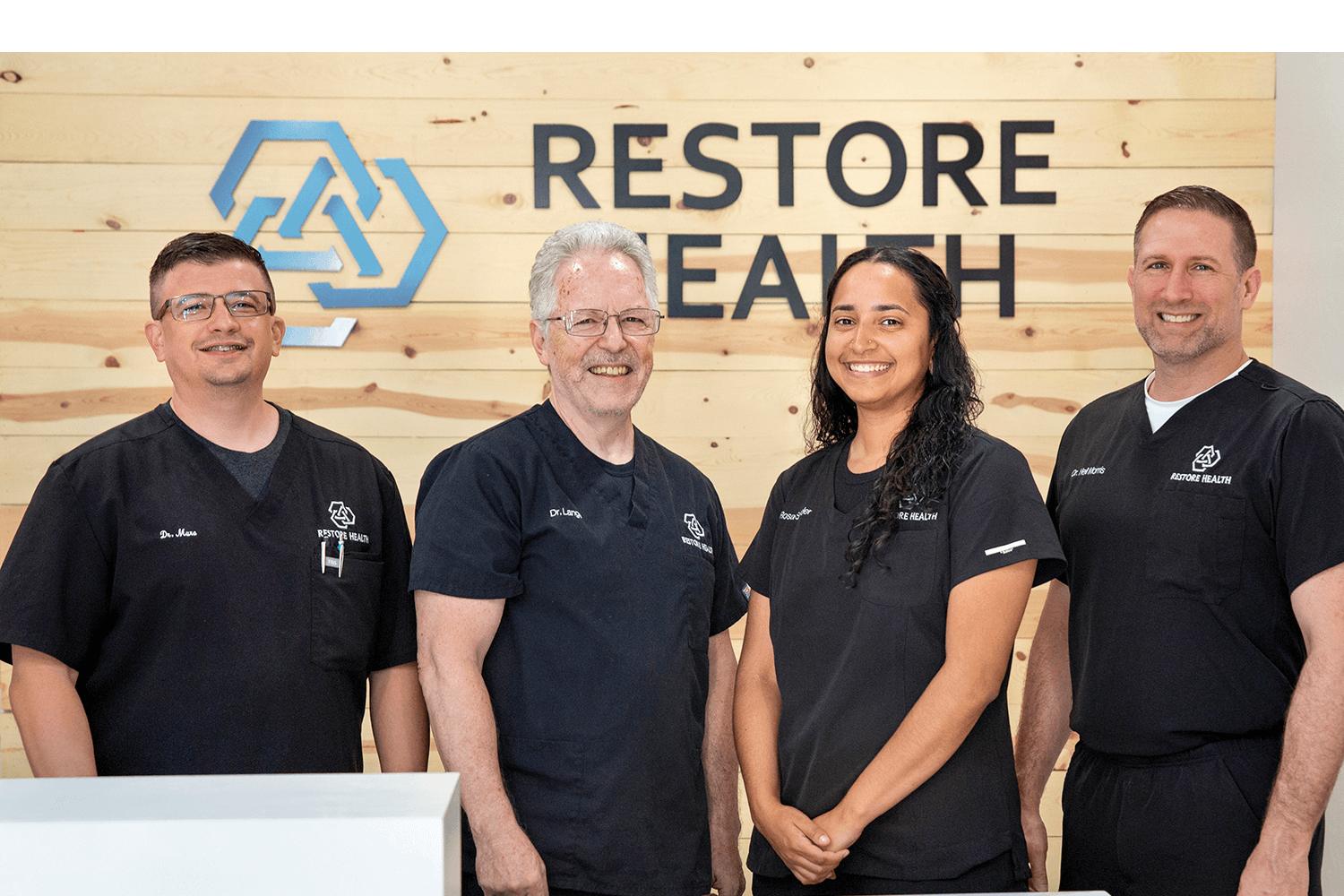 The doctors at Restore HealthRestore Health, Mesa

A pill has to survive your stomach, get through your gut wall and pass your liver before any of it reaches the rest of you. An IV skips all of that. Fluids, vitamins and minerals go straight into your bloodstream, the full dose arrives, and it's there before you leave the chair. That is the case for IV therapy in one sentence, and it's why we use it every week in our Mesa office.
The benefits of IV therapy
All of it gets in
With an IV, nothing is lost to digestion. What's in the bag is what reaches your blood. By mouth, your gut decides how much gets through, and it lets less in as the dose goes up. Vitamin C shows this clearly: at everyday amounts you absorb about 70 to 90 percent, but above 1 gram a day absorption falls below half and the rest leaves in your urine. [1]
It reaches levels a pill can't
Because the gut caps absorption, there's a ceiling on what swallowing more can do. Researchers estimate that even 3 grams of vitamin C by mouth every four hours would raise blood levels only modestly. [1] An IV goes past that ceiling. When the goal is to bring a low level up, that headroom is the point.
It works when your gut doesn't
Some people take the right supplement faithfully and still come up short. Vitamin B12 needs a protein from the stomach to be absorbed, and people with pernicious anemia don't make it. Celiac disease, Crohn's disease and past weight loss surgery can limit absorption too. [2] An IV or a shot goes around the problem.
It's easier on your stomach
Magnesium is a good example. Many people can't take much of it by mouth without loose stools, nausea or cramping, which is why the supplement limit for adults is set at 350 mg a day. [3] Given by IV, the dose never touches your gut.
Hydration that doesn't wait
Fluids by IV are in your bloodstream right away, with no waiting on a queasy stomach. After a stomach bug, a long flight or a long day in the Arizona sun, that matters. Some studies in athletes have found benefits for heart rate and temperature control with IV fluids, and one found that pairing IV fluids with drinking eased heat-related symptoms more than either one alone. [4] [5]
One visit, built for you
A drip takes about 45 to 60 minutes in a private room. You read, listen to something or nap. Fluids, vitamins and minerals arrive together, in a blend a doctor picked for your goals and your labs, with no handful of capsules to remember every morning.
Side by side
| IV therapy | Oral supplements | |
|---|---|---|
| How much gets in | All of it, straight into the bloodstream. | Part of it. The gut limits absorption, more so at higher doses. |
| How fast | Right away, during the visit. | Slower. Building a low level back up can take weeks. |
| If your gut absorbs poorly | Goes around it. | May fall short even when you take them faithfully. |
| On your stomach | Never touches it. | Some, like magnesium, can upset it. |
| Hydration | Fluids and electrolytes included. | Separate, and depends on how much you can drink. |
| Best for | Getting levels up, recovery and rehydration. | Holding levels steady day to day. |
Who gets the most out of an IV
These are the people we see in the IV room most often:
- Low energy that sleep isn't fixing, especially when labs show you're low on something
- Recovery after hard training, a race or an illness that knocked you down
- Rehydration after travel, heat or a long day outside
- A rough season, when you feel run down and want support
- Low vitamins or minerals on your labs that supplements haven't corrected
- Sensitive stomachs that don't tolerate the supplements they need
Many people tell us they feel more energy soon after a drip. Everyone responds differently, and your doctor will tell you what to expect from your blend.
Where supplements still fit
IVs and supplements work best together. Think of an IV as the way to get you where you need to be, and a few well-chosen supplements as the way to stay there. Many patients start with a short run of IVs to bring their levels up, then hold them with a simple daily routine and a recheck. That's also why most plans here begin with a full lab panel: it shows what you need and tells us when it's working.
Why a doctor-led IV is different
Not every IV is the same. At Restore Health, IV therapy happens in a medical office, not at a menu board.
- A doctor checks first. New patients start with a short visit with one of our naturopathic doctors, who asks about your history and medications before anything goes in.
- Your blend is built on you. It's chosen from your goals and, when you have them, your lab results.
- It fits the rest of your care. An IV can sit alongside hormone therapy, recovery from an injury or a health optimization plan.
- You rest in a private IV room while the drip runs, then head back to your day.
One safety note, since we're in Arizona: confusion, fainting, a body temperature of 103°F or higher, or hot skin with a fast, strong pulse are signs of heat stroke. That is a 911 call, not an IV visit. [6]
Questions people ask
Is IV therapy better than taking vitamins by mouth?
For getting nutrients in quickly and completely, yes. An IV delivers the full dose to your bloodstream right away, while a pill delivers part of it over time. Supplements are still useful for keeping your levels steady between visits, which is why we often use both.
Do IV vitamins absorb better than oral vitamins?
Yes. An IV goes straight into the bloodstream, so nothing is lost in digestion. By mouth, absorption depends on your gut and drops as the dose goes up.
How quickly will I feel an IV?
Many people notice more energy soon after, often the same day. Fluids work right away. If the goal is correcting a low level, your doctor will tell you how many visits to expect before a recheck.
How often should I get an IV?
It depends on your goal. Some people come weekly for a stretch to bring levels up or recover, then monthly to keep it up. Your doctor suggests a schedule after your first one.
Is IV therapy safe?
Most people have no side effects beyond a little bruising or soreness where the IV went in. Rarely, someone reacts to an ingredient. If you're pregnant or have a kidney or heart condition, tell us, and your doctor will adjust the plan. That check is the reason a doctor sees you first.
Do I need labs before an IV?
Not always, but they help. Labs let us build the blend around what you're low on and show whether it's working.
Sources
- NIH Office of Dietary Supplements: Vitamin C fact sheet for health professionals
- NIH Office of Dietary Supplements: Vitamin B12 fact sheet
- NIH Office of Dietary Supplements: Magnesium fact sheet
- Intravenous versus oral rehydration in athletes. Sports Medicine, 2010
- Thermoregulation and stress hormone recovery after exercise dehydration: comparison of rehydration methods. Journal of Athletic Training
- CDC: Heat-related illnesses, what to look for and what to do
Educational content, not medical advice. Individual results vary.